Water Damage Restoration & Extraction
Professional water damage restoration and rapid extraction services
Overview
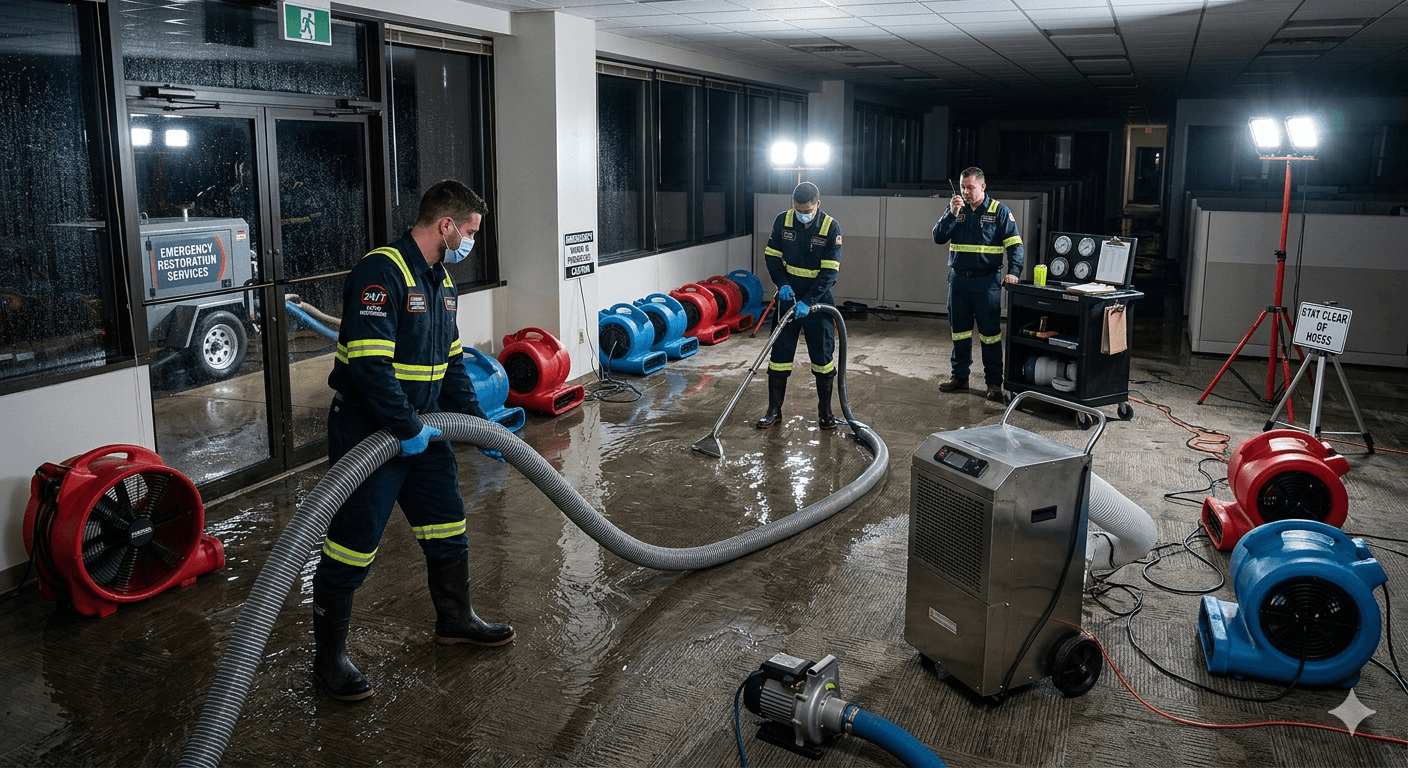
When water emergencies strike, timing is critical. Our emergency response team provides rapid extraction, professional drying, and comprehensive restoration. We handle everything from burst pipes to floods—using industrial equipment and proven methods to minimize damage and reduce mold risk.
Water damage accelerates with every hour it remains. Standing water causes incremental damage that spreads to new areas and deeper into materials. Wet materials begin degrading immediately, and mold can begin growing within 24-48 hours depending on conditions. Our rapid response deploys experienced teams with extraction and drying equipment, including high-capacity dehumidifiers and air movers. We manage water removal, control affected-area boundaries, and monitor moisture levels continuously using moisture mapping and verification readings. We also document conditions and drying progress for insurance and restoration closeout. Our goal is to return affected materials to safe, normal moisture levels as quickly as possible—so restoration can proceed without leaving moisture behind that could lead to recurrence.
Why This Matters
Water damage accelerates exponentially with time. Every hour that water remains increases final damage and mold risk. The first 24-48 hours often determine whether the outcome is limited damage with salvageable finishes—or extensive loss requiring deeper remediation. Rapid extraction and controlled drying reduce health hazards, improve restoration outcomes, and lower long-term remediation costs.
Key Benefits
Rapid Emergency Response Mobilization
We respond within hours with professional extraction and drying equipment.
Comprehensive Water Extraction Services
Industrial extraction equipment removes standing water completely and efficiently.
Professional Dehumidification and Drying
High-capacity equipment dries structures and materials quickly before damage occurs.
Mold Prevention Through Rapid Drying
Quick drying prevents mold growth that creates health hazards and expensive remediation.
Moisture Monitoring and Documentation
Continuous monitoring ensures all moisture is removed and damage is documented.
Content Salvage and Protection
Personal property and valuables are protected and salvaged whenever possible.
Insurance Claim Support and Documentation
Comprehensive documentation supports insurance claims and recovery efforts.
Odor Elimination and Decontamination
Professional decontamination eliminates water-related odors completely.
Protective Cleaning to Preserve Salvageable Materials
We prioritize cleaning and drying steps that help preserve affected contents and building finishes where possible.
Defined Drying Plans and Clear Drying Targets
We establish drying goals based on moisture readings so restoration does not move forward until results are verified.
Reduced Secondary Damage to Unaffected Areas
Containment and protective measures help prevent cross-contamination and spread of moisture.
Our Process
Emergency Response and Safety Assessment
We respond immediately and assess safety hazards, utilities, and emergency conditions.
Water Extraction and Removal
Standing water is extracted using industrial pumps and extraction equipment.
Initial Drying and Dehumidification
Air movers and dehumidifiers are deployed immediately to begin drying.
Moisture Mapping and Monitoring
Moisture levels are mapped and continuously monitored to track drying progress.
Controlled Area Containment and Protective Barriers
We protect unaffected spaces and manage airflow/migration so drying is efficient and contamination risk is reduced.
Damaged Material Removal and Disposal
Severely damaged materials are removed and properly disposed of.
Deep Drying and Structural Dehumidification
Continuing drying addresses moisture deep in structures and materials.
Secondary Damage Prevention
We implement protective measures to prevent water from spreading to unaffected areas.
Final Inspection and Moisture Verification
Once moisture levels return to normal, we conduct final inspection and provide documentation for your insurance.
FAQ & Next Steps
Clear answers and a practical path forward so you know exactly what happens next.
Frequently Asked
?How fast do you respond to water emergencies?
?What happens during the drying process?
?How do you prevent mold during restoration?
?Do you handle contents and personal property?
?Will you provide documentation for insurance?
Next Steps
- 1
Contact us for a consultation and schedule a site visit.
- 2
We inspect conditions, document findings, and confirm scope requirements.
- 3
You receive clear recommendations, options (when applicable), and a project plan.
- 4
We coordinate scheduling and start work with safety, access, and quality controls in place.
- 5
We complete the project with verification/inspections and provide closeout documentation.
Ready to Get Started?
Contact our team to discuss how Water Damage Restoration & Extraction can benefit your project.