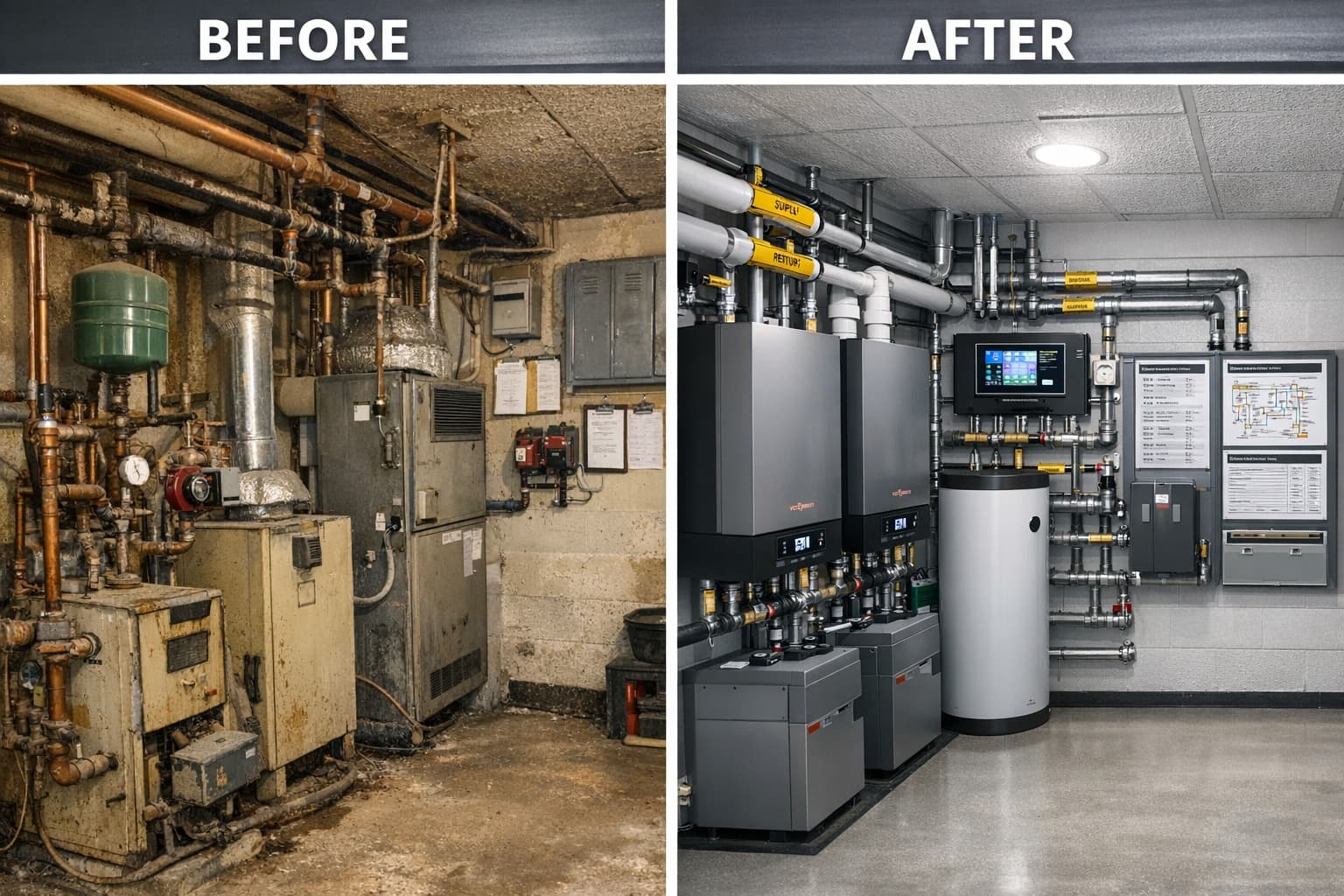
Mechanical Room Modernization
Complete mechanical room upgrades and modernization
Overview
Modernize your mechanical room with updated equipment, controls, and efficiency improvements. We coordinate end-to-end system upgrades for better reliability and easier maintenance.
Mechanical rooms often include equipment at different ages with varying performance and reliability. Comprehensive modernization upgrades outdated equipment, improves controls and monitoring, and typically includes layout reconfiguration for improved space use and maintenance access. We modernize the systems that support daily operations—often including equipment replacements, piping and insulation improvements, control sensor upgrades, and integration improvements with building management systems where applicable. Well-modernized mechanical rooms feature cleaner layouts, better labeling, clear documentation, and controls that allow operators to monitor performance and respond quickly to abnormal conditions. Our modernization approach reduces inefficiencies, improves uptime, and supports long-term maintainability while coordinating multiple scopes to avoid gaps between trades.
Why This Matters
Mechanical rooms with mixed-age equipment can lead to inefficient operation, higher maintenance costs, and unexpected failures—especially during peak demand periods. Modernization improves performance, increases reliability, and strengthens control and monitoring so issues can be identified earlier. In many cases, it also reduces the likelihood of emergency repairs by replacing at-risk components before they fail.
Key Benefits
Prevention of System Obsolescence
Modernization replaces aging equipment before it becomes obsolete and unavailable.
Improved Operational Efficiency
Modern systems and controls operate more efficiently reducing energy and maintenance costs.
Optimized Space Utilization
Reconfiguration often improves space efficiency and maintenance access.
Modern Controls and Monitoring
Integrated controls and monitoring systems improve performance visibility and optimization.
Reduced Maintenance Requirements
Modern equipment requires less maintenance and provides better reliability.
Future-Proof System Design
Modern systems accommodate future expansion and upgrades.
Enhanced Operator Safety
Modern equipment incorporates improved safety systems and controls.
Improved Documentation and Labeling
Comprehensive documentation and labeling facilitate operations and maintenance.
Lower Risk of Catastrophic Failures
Replacing at-risk equipment reduces sudden failures that cause downtime and emergencies.
Energy Savings Through Efficiency Upgrades
Upgrades to equipment and controls help reduce waste and improve part-load performance.
More Maintainable Systems for Operators
Better layouts, access, and labeling make routine maintenance faster and safer.
Our Process
Comprehensive Mechanical Room Audit
We document all equipment, systems, connections, and current conditions.
Systems Evaluation and Efficiency Analysis
We evaluate system performance and identify efficiency improvement opportunities.
Comprehensive Upgrade Planning
We develop detailed plans for equipment upgrades, controls integration, and layout optimization.
Equipment Removal and Installation
Old equipment is carefully removed and new equipment is installed.
Controls Integration and Programming
New controls are integrated and programmed for optimized system operation.
Controls/BMS Integration Verification
We verify sensor inputs, control logic, and any BMS communication before commissioning.
System Testing and Commissioning
All systems are tested and commissioned to verify proper integration.
Complete Documentation and Labeling
Comprehensive 'as-built' documentation and equipment labeling is provided.
Operator Training and Handoff
Building operators receive training on new systems and receive all documentation.
Post-Commissioning Trend Review
We review initial system trends and performance to confirm stable operation.
FAQ & Next Steps
Clear answers and a practical path forward so you know exactly what happens next.
Frequently Asked
?What does a mechanical room modernization typically include?
?Why does mechanical room design affect reliability?
?Do you verify controls/BMS integration?
?How do you ensure safe and smooth commissioning?
?Will operators be trained?
Next Steps
- 1
Contact us for a consultation and schedule a site visit.
- 2
We inspect conditions, document findings, and confirm scope requirements.
- 3
You receive clear recommendations, options (when applicable), and a project plan.
- 4
We coordinate scheduling and start work with safety, access, and quality controls in place.
- 5
We complete the project with verification/inspections and provide closeout documentation.
Ready to Get Started?
Contact our team to discuss how Mechanical Room Modernization can benefit your project.